None
Operating Unit, Parameter Name, Parameter Code, Enabled Only
fnd_flex_value_sets, oe_sys_parameter_def_vl, oe_sys_parameters_all, hr_all_organization_units_vl
CAC Intercompany SO Price List vs. Item Cost Comparison, AR Customer Upload
If you would like to try one of these Oracle EBS SQLs without having Blitz Report installed, note that some of the reports require functions from utility package xxen_util.
ONT System Parameters 08-Dec-2024 133111.xlsx
www.enginatics.com/reports/ont-system-parameters/
Blitz Report™ import options
The ONT System Parameters report is a vital audit and configuration tool that provides a comprehensive listing of all system-level parameters for the Oracle Order Management (ONT) module. It displays the active values for these parameters for any given operating unit. This report is indispensable for functional consultants, system administrators, and support analysts for troubleshooting, comparing environments, and maintaining configuration documentation.
The Oracle Order Management module's behavior is governed by a complex set of underlying system parameters. Managing and auditing these settings is a significant challenge for any organization.
- Configuration Complexity: The sheer number of parameters makes it difficult to maintain a holistic view of the system's configuration. Settings are often distributed across multiple setup screens in the application.
- Environment Inconsistency: One of the most common causes of issues after a production deployment is a missed or incorrect parameter setting that differs from the Test or UAT environment. Manually comparing these settings screen-by-screen is impractical and error-prone.
- Difficult Troubleshooting: When users report unexpected behavior in order entry or processing, the root cause is often a system parameter. Identifying the relevant parameter and checking its value can be a time-consuming step in the diagnostic process.
- Audit and Documentation: Creating and maintaining accurate documentation of all Order Management settings for internal audits or project blueprints is a significant manual effort.
The ONT System Parameters report provides a simple, direct, and powerful solution to these challenges by extracting all relevant configuration data into a single, easy-to-read report.
- Centralized Configuration View: It consolidates all Order Management system parameters and their values for a selected operating unit into one place, providing a complete configuration snapshot.
- Effortless Environment Comparison: By running the report in two different instances (e.g., Test and Production) and exporting to Excel, administrators can use simple comparison tools to instantly identify any discrepancies in setup, dramatically reducing the risk of deployment-related issues.
- Accelerated Troubleshooting: Support analysts can use this report to quickly review all active parameter settings when troubleshooting an issue, rather than navigating through multiple application forms.
- Automated Documentation: The report serves as on-demand, accurate documentation of the system setup, which can be archived for audit purposes or used as a baseline for future projects.
The report queries the core setup tables for Oracle Order Management to present a clear view of the module's configuration.
- Primary Tables Involved:
oe_sys_parameters_all(This table stores the specific value of each parameter for each operating unit).oe_sys_parameter_def_vl(This is the definition table, containing the name, description, and default value for every available parameter).hr_all_organization_units_vl(Used to select and display the Operating Unit name).
- Logical Relationships: The report's core logic is to join the parameter value table (
oe_sys_parameters_all) with the parameter definition table (oe_sys_parameter_def_vl) to present the parameter's code, its user-friendly name, its descriptive help text, and its currently set value for the specified operating unit.
The report's parameters allow for both broad and specific queries:
- Operating Unit: The primary filter to select the organization whose parameters you wish to view.
- Parameter Name / Parameter Code: Allows users to query for a single, specific parameter to see its value across one or all operating units.
- Enabled Only: Filters the list to show only parameters that are currently active or enabled.
This is a high-performance report that runs very quickly.
- Small Data Volume: The underlying parameter tables contain a very small number of rows compared to transactional tables, so the query executes almost instantaneously.
- Indexed Lookups: The query uses the primary key indexes on the setup tables (
org_id,parameter_code) for efficient data retrieval.
1. What is the difference between a parameter's value in this report and its default value?
The report shows the currently active value for the parameter in a specific operating unit. The underlying definition table (oe_sys_parameter_def_vl) holds the system's default value. If a value has never been explicitly set for an operating unit, the system uses the default. This report shows the outcome of that logic.
2. Can I use this report to see who changed a parameter and when?
The standard oe_sys_parameters_all table does not store an audit trail of changes (who/when). That level of tracking would typically require enabling Oracle's audit trail functionality on the table. This report shows the current state of the configuration.
3. Why do some parameters appear for every operating unit? The Order Management system parameters are defined at the operating unit level. This allows a single Oracle instance to have multiple operating units that behave differently (e.g., one OU might have credit check enabled, while another does not). This report correctly shows the specific value for each parameter within each OU.
Oracle E-Business Suite Reporting Library
We provide an open source Oracle EBS SQLs as a part of operational and project implementation support toolkits for rapid Excel reports generation.
Blitz Report™ is based on Oracle EBS forms technology, and hence requires minimal training. There are no data or performance limitations since the output files are created directly from the database without going through intermediate file formats such as XML.
Blitz Report can be used as BI Publisher and Oracle Discoverer replacement tool. Standard Oracle BI Publisher and Discoverer reports can also be imported into Blitz Report for immediate output to Excel. Typically, reports can be created and version tracked within hours instead of days. The concurrent request output automatically opens upon completion without the need for re-formatting.
The Filters, Columns, Rows and Values fields are used to create and deliver the data in pivot table format with full drill down to details.
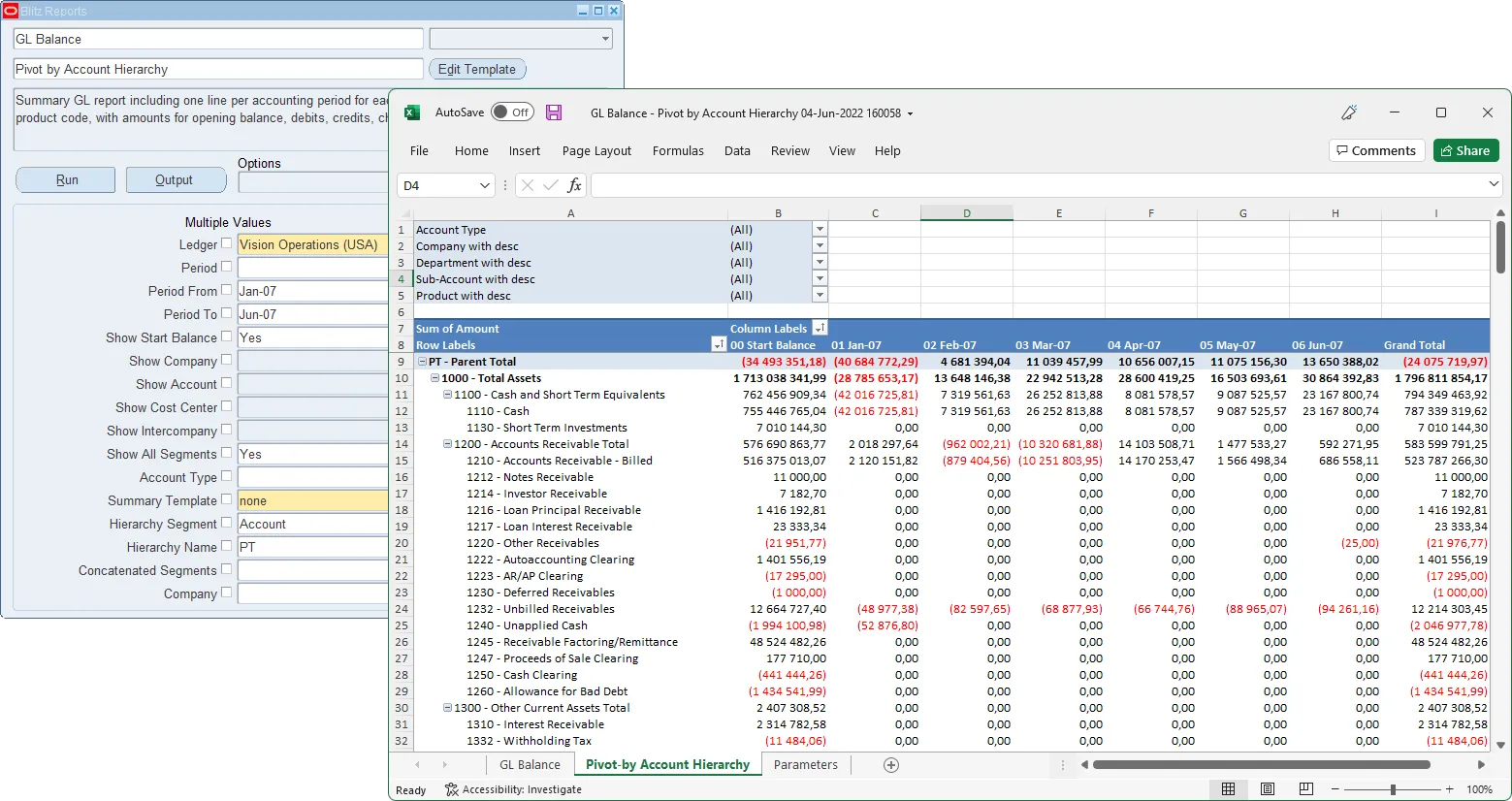
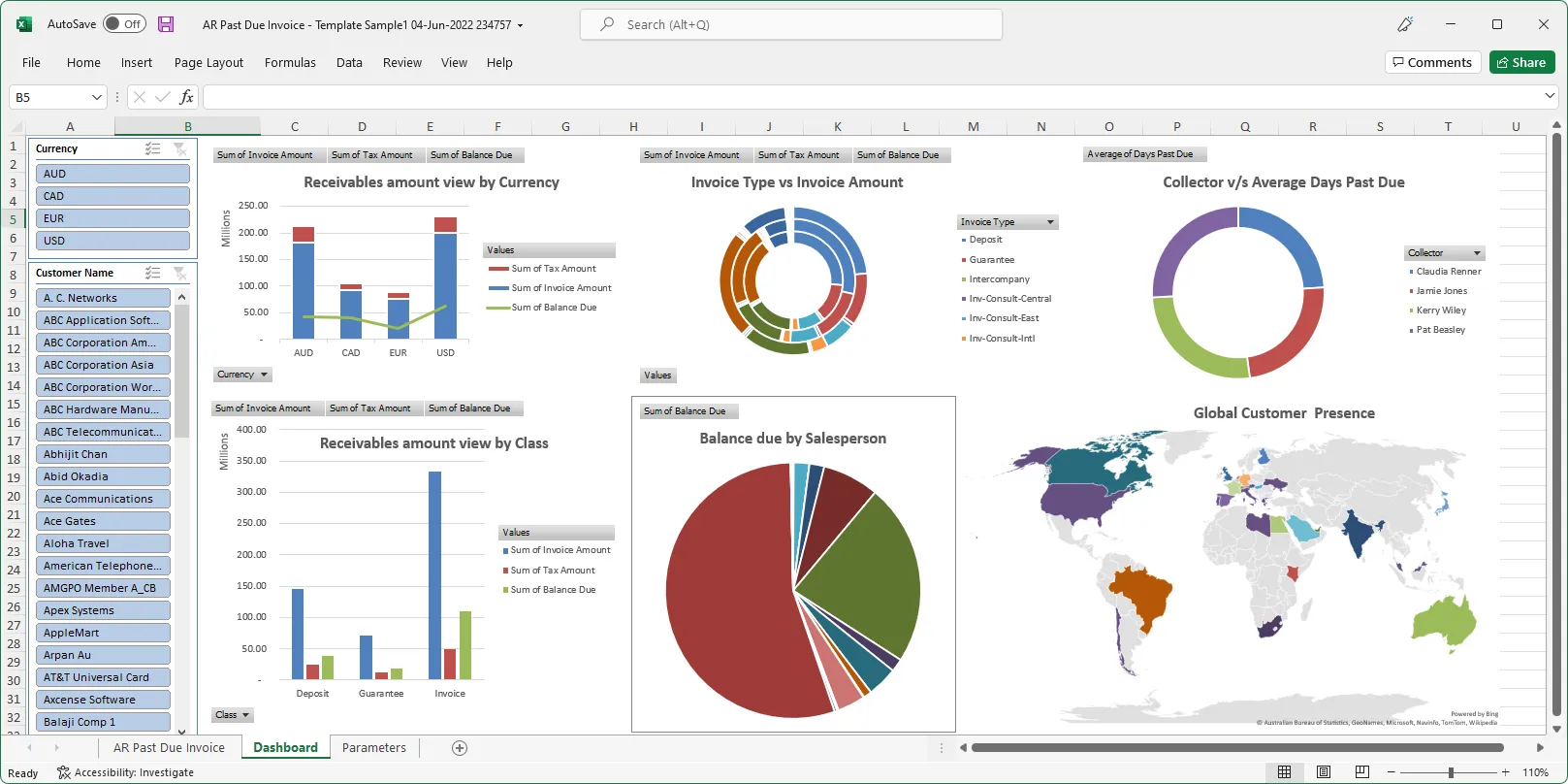
The Excel template upload functionality in Blitz Report allows users to create their own layouts by uploading an Excel template with additional sheets and charts, automatically refreshed when the report runs again. This allows to create custom dashboards and more advanced visualizations of report data.
You can download and use Blitz Report free of charge for your first 30 reports.
The installation and implementation process usually takes less than 1 hour; you can refer to our installation and user guides for specific details.
If you would like to optimize your Oracle EBS implementation and or operational reporting you can visit www.enginatics.com to review great ideas and example usage in blog. Or why not try for yourself in our demo environment.
Blitz Report™ – World’s fastest data upload and reporting for Oracle EBS
Oracle Discoverer replacement – importing worksheets into Blitz Report™
Blitz Report™ Questions & Answers
Supply Chain Hub by Blitz Report™
© 2025 Enginatics