This project introduces an AI-driven one-to-one advertising system that combines Web Scraping, NLP, LLMs, and Retrieval Augmented Generation (RAG) to optimize ad placements. The addition of RAG enhances personalization by retrieving real-time contextual data before ad generation. This approach improves ad relevance, engagement, and privacy-conscious personalization, offering a robust framework for next-generation digital advertising. Below is an overview of the analysis, along with sample outputs and results. This project was done in May' 2024.

- This paper was presented in the “2024 15th International Conference on Computing Communication and Networking Technologies (ICCCNT)”
- This paper is yet to be published by IEEE.
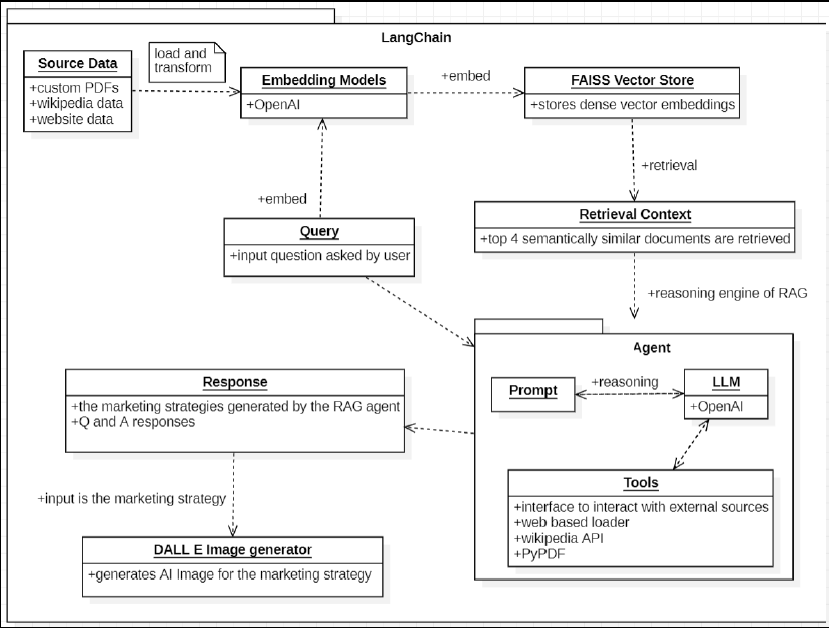
- The below block diagram gives an overview of the overall funtionality of the implemented project
-
Web Scraping & Data Extraction: The system leverages web scraping and APIs to extract real-time data from websites, enabling personalized advertisement recommendations based on user behavior and market trends.
-
Retrieval-Augmented Generation (RAG) for Contextual Ads: By integrating RAG with LLMs, the model retrieves relevant documents from external sources (PDFs, Wikipedia, and scraped data) to generate precise and context-aware ad strategies.
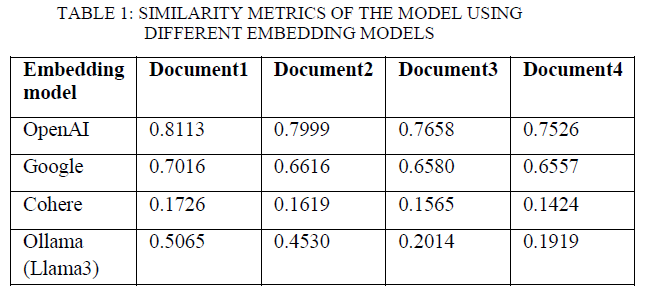
OpenAI's GPT-4o LLM was used. Other LLMs such as Google's Gemini, Cohere and Llama3 were also tested but OpenAI LLM worked better for this particular application.
-
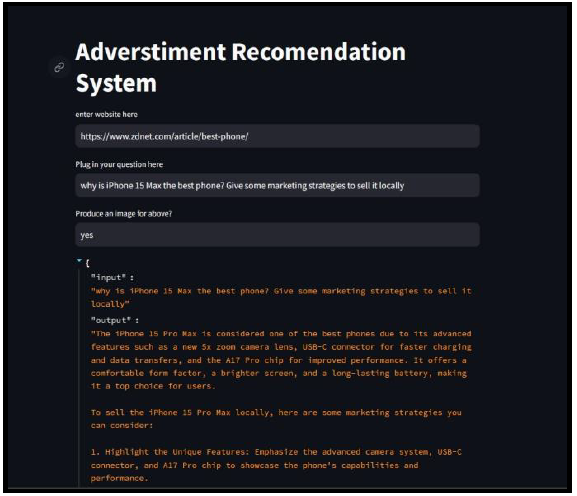
AI-Generated Marketing Campaigns: The framework produces detailed advertisement strategies along with AI-generated images using DALL·E, enhancing user engagement through visually appealing content.
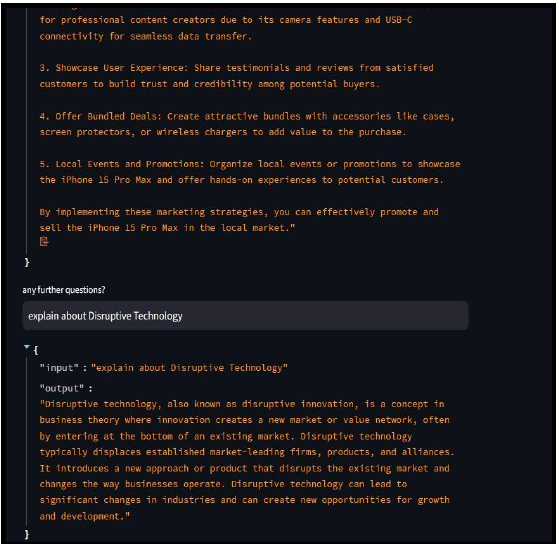
An ad recommendation strategy suggested by the proposed model
- Web Scraping & Data Extraction
- WikipediaAPI – To fetch advertising-related data from Wikipedia.
- WebBaseLoader – For crawling and converting website content into structured text data.
- PyPDFDirectoryLoader – To extract and process text from advertising strategy PDFs.
- Retrieval-Augmented Generation (RAG) Framework
- LangChain – The backbone of the RAG implementation, integrating various tools and models.
- FAISS (Facebook AI Similarity Search) – To store and retrieve embeddings efficiently.
- OpenAI Embeddings – For creating vectorized text representations.
- DALL·E – To generate AI-driven advertisement images based on marketing strategies.
- Front End:
- Steamlit : frontend interface for allowing users to input website URLs, specify advertisement preferences, and visualize the generated ad strategies and AI-generated images.
-
Update File Paths – Ensure all file paths in the scripts match your local system.
-
Run
code.ipynb– This file integrates all the LangChain models and serves as the core of the project. -
Execute
retriever.ipynb– Implements the RAG architecture using custom PDFs stored in the/filesdirectory. You can replace these PDFs as needed. -
Run
results.ipynb– Compares different LLM models, including Gemini, Cohere, and Llama 3, to analyze their performance. -
Launch
frontend.py– This file runs the Streamlit-based frontend, providing an interface for users to prompt the model and generate results. -
Prerequisites:
- Python
- LangChain
- API keys for LLM models: GPT-4o, Google Gemini, Cohere, and Llama 3
The project can be implemented and tested to verify funtionality