
Apply several principles of the Queueing Theory with Python to design a parcel packing process for an e-commerce fulfilment centre
Supply Chain can be defined as a network of processes and stock locations built to deliver services and goods to customers.
This network usually supports the business strategy of your company; its objectives can be diverse, such as delivering the best quality products, the lowest cost or the most customised service or product in the market.
As a Supply Chain Engineer, your objective is to design the most efficient processes to ensure a good service level for your customers and profitability.
Find in the link below a short animated video to explain the concept behind this solution

In this Article, we will apply principles from the Queueing Theory with Python to design a process for parcel packing in an E-Commerce Fulfilment Centre.
You are the Outbound Manager of a multinational clothing retail company known for its fast-fashion clothing for men, women, teenagers, and children. A major problem you’re facing is outbound productivity; after picking up your orders, they are waiting too long to be shipped. Based on on-site observations and In the productivity analysis, you understood that the packing process was the bottleneck.
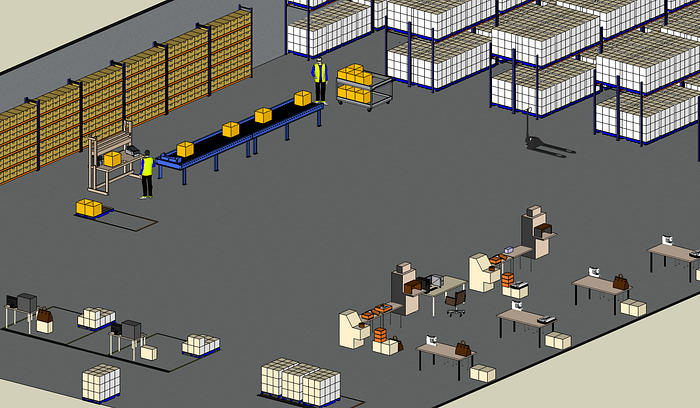
2. Packing Operator: Takes the parcels from the conveyor, performs a quantity check, and packs (puts filling material, closes the box)
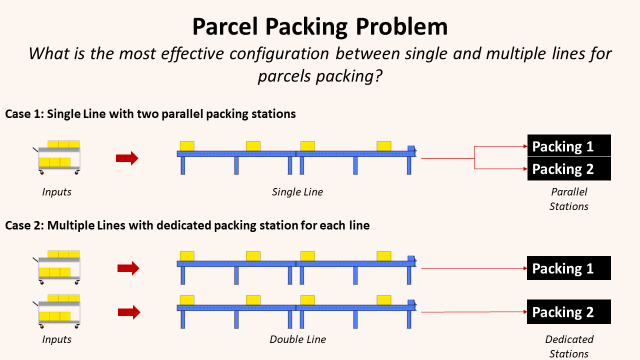
You've received approval from your management to invest in a second packing station and are wondering how to design the layout.
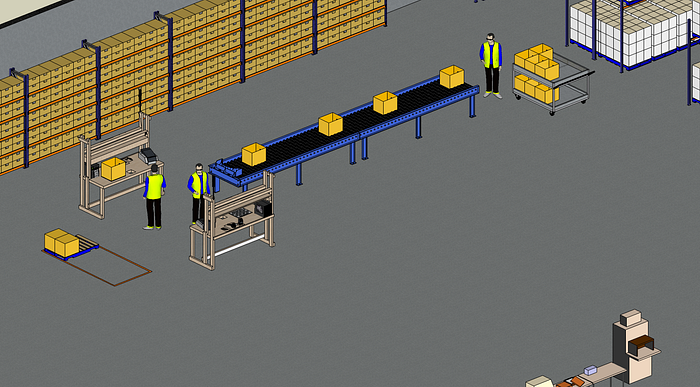
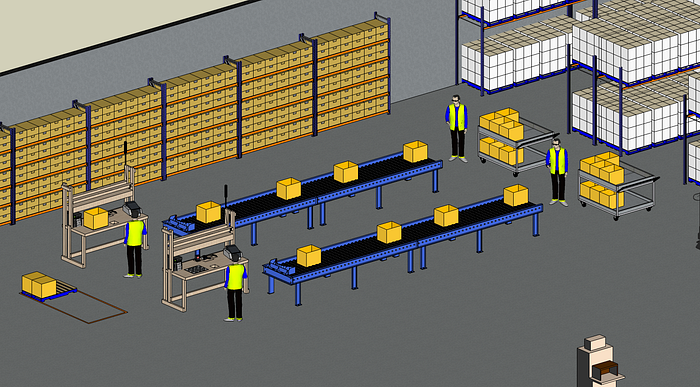
What is the most efficient (Packing Productivity) solution?
In this repository, you will find all the code used to explain the concepts presented in the article.
Senior Supply Chain and Data Science consultant with international experience working on Logistics and Transportation operations.
For consulting or advising on analytics and sustainable supply chain transformation, feel free to contact me via Logigreen Consulting.
Please have a look at my personal blog: Personal Website