Automating microscopic biodiversity analysis using Edge AI on Raspberry Pi
A low-cost, offline, and scalable intelligent microscopy solution for marine ecosystem monitoring.
Marine biodiversity assessments depend heavily on the microscopic analysis of organisms like phytoplankton and zooplankton, which are crucial for monitoring ocean health, predicting algal blooms, and managing fisheries.
However, manual microscopic analysis is:
- 🕐 Time-consuming: ~20 minutes per sample
- 👩🔬 Labor-intensive: Requires skilled taxonomists (often in shortage)
- ⚖️ Subjective: Prone to human error
- 🚫 Not scalable: Unsuitable for large-scale or real-time monitoring
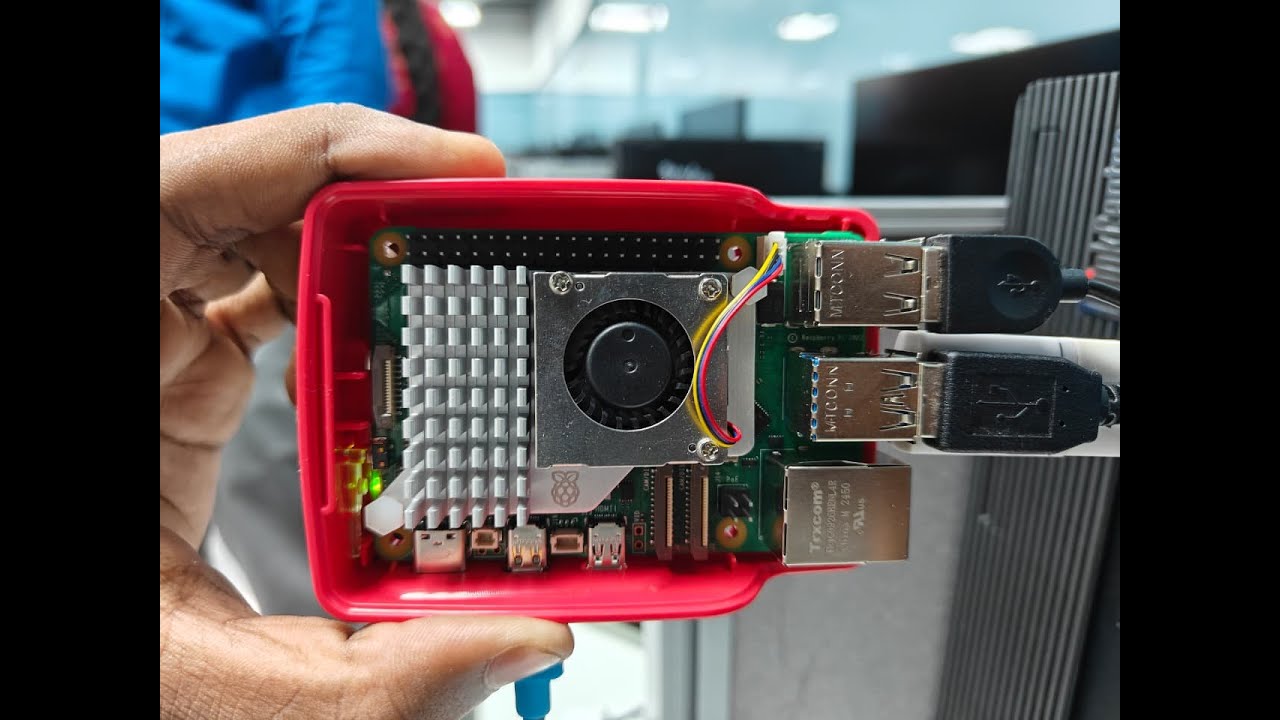
To develop an AI-powered embedded microscopy system that automates detection, classification, and counting of marine microorganisms — directly on low-cost hardware like the Raspberry Pi 5, fully offline and field deployable.
We designed a Raspberry Pi–based Embedded Intelligent Microscopy System that can:
- Capture high-resolution images from a USB digital microscope
- Run quantized YOLOv8 Nano models for real-time detection and classification
- Perform automated counting and labeling of detected species
- Export data in standardized formats (Darwin Core / OBIS)
- Operate fully offline, making it ideal for ships and coastal monitoring labs
Microscope → Image Capture → Detection + Classification (YOLOv8-Nano) → Counting → Dashboard (Streamlit) → Export (JSON/CSV in Darwin Core)
| Component | Specification |
|---|---|
| Compute Unit | Raspberry Pi 5 (8GB RAM) |
| Microscope | USB Digital Microscope (1080p/4K) |
| Storage | 64GB SD Card / SSD |
| Power Supply | 27W PSU or 20,000mAh Power Bank |
| Cooling | Active Cooling Fan (recommended) |
- Language: Python 3.11
- Frameworks: PyTorch → ONNX → TensorFlow Lite
- Model: YOLOv8 Nano (for detection + classification)
- Libraries: OpenCV, NumPy, Streamlit, Matplotlib, Pandas, Ultralytics
- Interface: Streamlit web dashboard for live results and performance monitoring
| Task | Model | Accuracy | Notes |
|---|---|---|---|
| Detection & Classification | YOLOv8 Nano | 84% | Quantized ONNX/TFLite model optimized for Raspberry Pi |
| Counting | Detection-driven | 76% | Automatically counts organisms per class |
- Post-training quantization for embedded inference
- Pruning for low latency and faster FPS
- Multi-scale detection using feature pyramids
- Image Quality Assessment (IQA) filters to reject low-quality frames
| Feature | Description |
|---|---|
| 🔍 Real-time Detection & Classification | Displays bounding boxes, labels, and confidence |
| 📊 Performance Metrics | Shows FPS, CPU Usage, Memory Utilization |
| 🧾 Automatic Counting | Enumerates detected species per frame |
| 💾 Data Export | Saves outputs in JSON/CSV (Darwin Core / OBIS formats) |
| 🌐 Hybrid Mode | Optional online model update |
| 🧱 Offline-First Operation | Works without internet connectivity |
| Stage | Milestone | Status |
|---|---|---|
| Stage 1 | Model training (YOLOv8 Nano) & pipeline design | ✅ Completed |
| Stage 2 | Web dashboard integration + laptop demonstration | ✅ Completed |
| Stage 3 | Full Raspberry Pi integration + optimization | 🔜 In Progress |
| Sector | Use Case |
|---|---|
| Marine Research | Automated biodiversity monitoring |
| Aquaculture | Water plankton health & fish safety |
| Environmental Monitoring | Early detection of harmful algal blooms |
| Academia | AI microscopy toolkit for teaching & research |
| Healthcare (Future) | Extendable to microbial diagnostics |
- Make in India: Indigenous AI hardware + software
- Digital India: Digitized biodiversity data collection
- SDG 14 – Life Below Water: Marine ecosystem protection
- SDG 6 – Clean Water: Freshwater quality monitoring
- Skill Development: Promotes embedded AI & research in Indian institutions
- ⚙️ Working embedded AI microscopy prototype
- 🔍 Real-time detection, classification, and counting demonstration
- 🧾 Reproducible and documented AI pipeline
- 🌎 Scalable framework for marine research institutions
- Edge AI inference on Raspberry Pi 5
- Quantized YOLOv8 Nano model for both detection & classification
- Integrated IQA filters for image quality validation
- Federated learning–ready data pipeline
- Total system cost under ₹12,000
- Power-efficient (10–12W) and portable for field use
| Name | GitHub |
|---|---|
| 🧑💻 Member 1 | Madhavan |
| 🧑💻 Member 2 | Akashgautham |
| 🧑💻 Member 3 | Vijaya Karthick |
| 🧑💻 Member 4 | Rakshithasri |
| 🧑💻 Member 5 | Raksha |
| 🧑💻 Member 6 | Divyesh Hari |
Team CodeFather – Innovating for Sustainable Marine Ecosystems 🌊
# Clone repository
git clone https://github.com/TeamCodeFather/embedded-ai-microscopy-system.git
cd embedded-ai-microscopy-system

# Install dependencies
pip install -r requirements.txt

# Run dashboard
python app.py
Ensure the USB digital microscope is connected and accessible.
Raspberry Pi build instructions available in/docs/pi_setup.md.
This project is released under the MIT License.
You are free to fork, modify, and improve for educational or research purposes.
We are building an AI-powered, offline, embedded microscopy system that automates the detection, classification, and counting of marine microorganisms using YOLOv8 Nano on the Raspberry Pi 5.
This indigenous innovation is low-cost, scalable, and field-deployable, empowering Indian research institutions with advanced biodiversity monitoring tools.
"From ocean plankton to planetary health — AI at the edge for a sustainable future." 🌎


